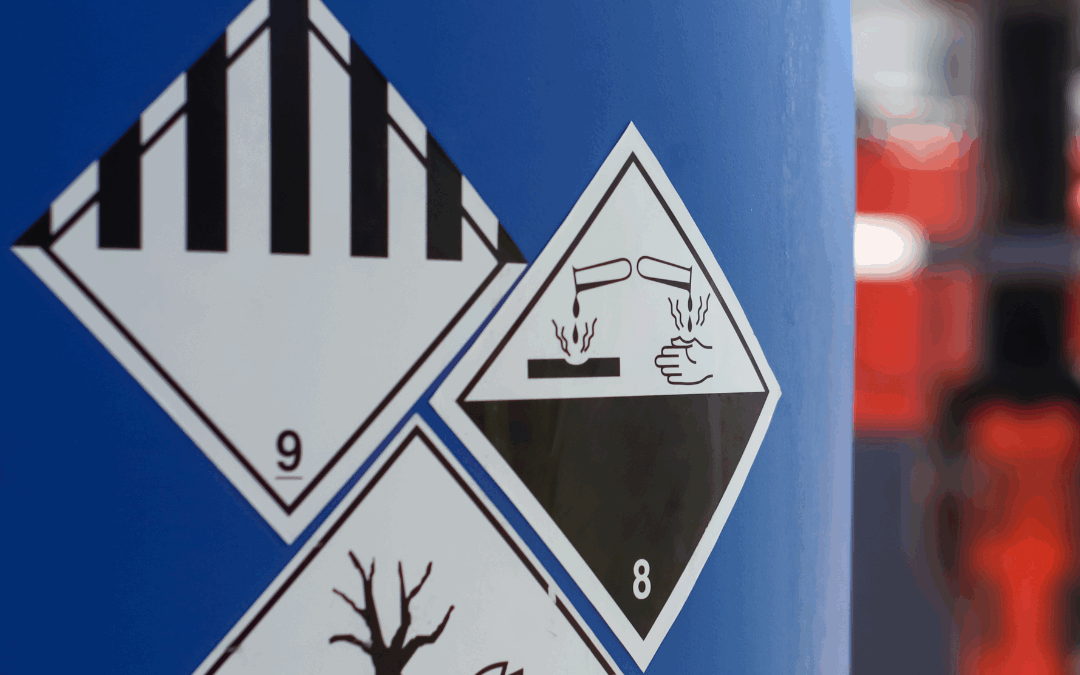
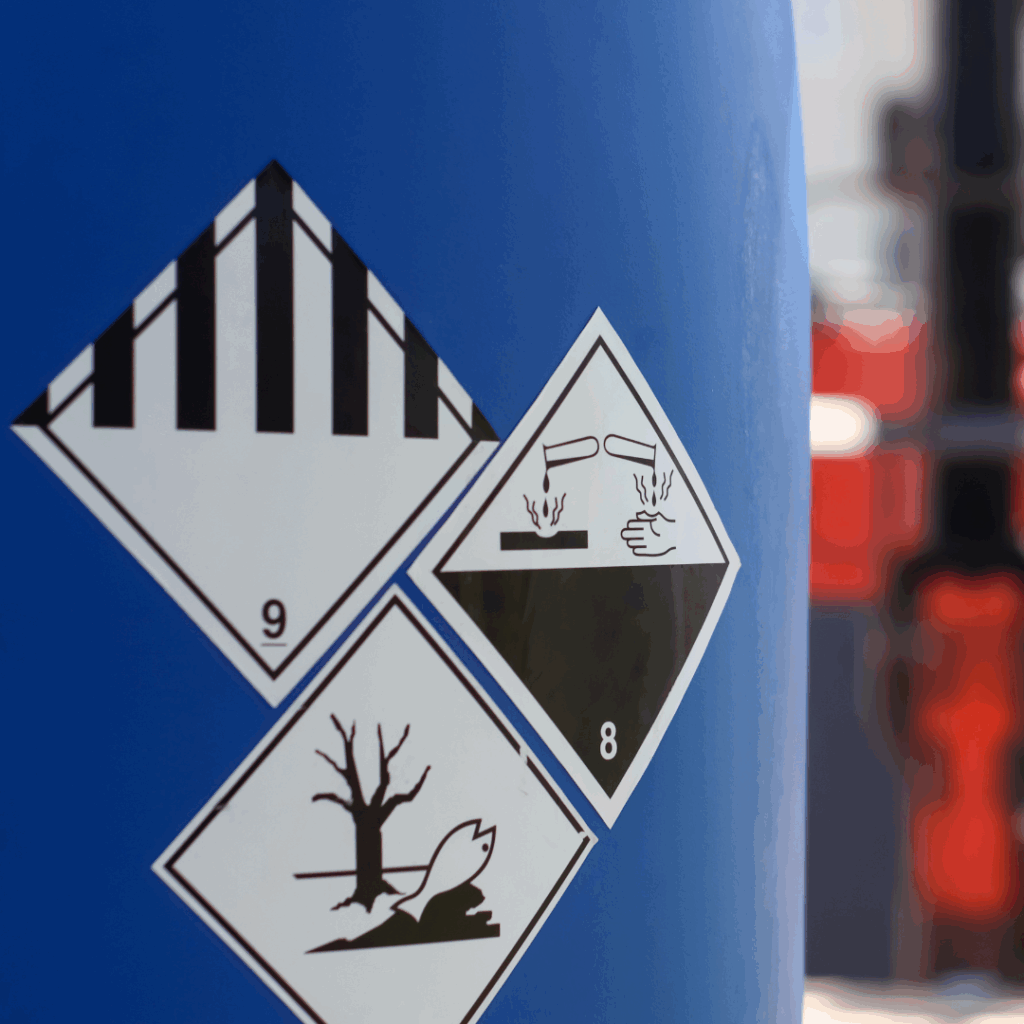
A chemical inventory is first and foremost about order and overview, and is an important tool in the health, safety and environment (HSE) work of any company that handles hazardous chemicals. There are clear requirements for documentation and available information, and a chemical inventory collects this in one place so that laws, regulations and internal procedures are followed.
What is a chemical inventory?
A chemical is considered hazardous if it is classified in accordance with European legislation (REACH and CLP), either for health, physical or environmental hazards. A substance register is a collection of necessary information about hazardous chemicals in the workplace, including safety data sheets (SDS).
The purpose of a chemical inventory is to make it easy for employees to find relevant information for safe and efficient handling of chemicals. The safety data sheets provide guidance on both preventive measures – such as the use of protective equipment, correct storage and handling routines – and reactive measures in the event of accidents, such as spills, fires or exposure to chemicals. In this way, the chemical inventory serves as a practical tool both in day-to-day HSE work and in emergency situations.
What should a chemical inventory contain?
A chemical inventory must meet the requirements of the Norwegian Labor Inspection Authority’s guidelines, the European REACH regulations and the CLP regulations. In Norway, it is a requirement that the information in the chemical inventory must be in Norwegian. If employees are not fluent in Norwegian, the employer must ensure that the chemical information is made available in a language the employees understand.
As a minimum, the chemical inventory must contain:
Chemical overview with names, classification, hazard symbols and updated SDS for hazardous chemicals
Information sheets for non-classified chemicals in the workplace, such as pharmaceuticals, welding fumes and other process-generated chemicals
Risk assessments of the chemicals with preventive measures
Who is responsible?
Both the employer and the employee have certain responsibilities, but it is the employer who is primarily responsible for creating and maintaining the chemical inventory.
The employee’s responsibility:
Follow established routines and procedures when handling hazardous chemicals
Participate in necessary training in the use of the chemical inventory
Report if information in the chemical inventory is missing or outdated
The employer’s responsibility:
Creating and maintaining the chemical inventory
Ensure that the chemical inventory is updated with valid SDS
Ensure that the chemical inventory is in accordance with legal requirements
Make the chemical inventory easily accessible (digitally or physically) for employees
Provide necessary training in the use of the chemical inventory
Known challenges
Lack of quality control of SDS
For many companies, keeping their chemical inventory up to date is a challenge. Data sheets or chemical overviews may be out of date, resulting in incorrect or incomplete information. This weakens HSE work and can lead to both orders and fines from the authorities.
Difficult to find information
In the past, it was a requirement that the chemical inventory should be on paper. Many companies still use physical binders, which results in a lot of manual work. Regardless of the format, the MSDS can contain large amounts of information that can be difficult to navigate without good routines and adequate training.
How to get started with a chemical inventory
An effective chemical inventory starts with clear procedures for purchasing and systematic HSE work, as described in the company’s management system. Ensure that roles and responsibilities are clearly defined so that the chemical management system is followed up and maintained.
Map the chemicals: Get an overview of all chemicals present in the workplace
Build structure: Organise your chemical inventory to reflect how and where chemicals are stored
Enter information: Register the chemicals and retrieve approved safety data sheets, preferably through an easy-to-use chemical management system
Make the information accessible: Make sure that all employees who handle chemicals have easy access to the chemical inventory
Keep your index up to date: Add new chemicals when purchasing, and archive products you no longer use
An up-to-date chemical inventory gives your business control over the chemicals it uses and is a legal requirement to prevent damage to health and the environment. With a digital and automated chemical system, it is easier to ensure that the information is always up-to-date, correct and accessible.
Diisocyanates are hazardous chemicals: New training requirements
Hans Kristian Brekken er kjemiker og produktutvikler Workplace Safety.
Diisocyanates are a group of hazardous chemicals used in paints, varnishes and adhesives. Workers can suffer serious damage to their health after being exposed to products containing these chemicals. The European chemicals regulation REACH has now introduced requirements for training in safe use.
Health challenges related to exposure
– “You can be exposed to diisocyanates through skin contact, inhalation or ingestion, and even small amounts can cause serious damage to your health,” explains Hans Kristian Brekken, a chemist with experience of laboratory work and HSE in the petroleum industry.
– What is dangerous about isocyanates is that they cannot be smelled until they are far above acceptable limit values. There is therefore a great risk of inhaling air containing the substance for a long time before you notice it yourself.
The most common symptoms of exposure are breathing problems, stuffy or runny nose, and irritating cough or nosebleeds. Some diisocyanates, such as TDI (Toulene diisocyanate), are also classified as carcinogenic.
– Exposure to diisocyanates is irritating and allergenic to the respiratory tract and can result in occupational asthma, which is one of the reasons why these chemicals have received so much attention. In Europe, many thousands of workers suffer from respiratory diseases every year because of this,” says Brekken.
New training requirements
Diisocyanates are found in a wide range of industrial products and the training requirement applies to several industries and occupational groups. By August 24, 2023, anyone using diisocyanates and diisocyanate-containing mixtures with a concentration of 0.1% (weight percentage) or more must have completed training in safe use. The Norwegian Labor Inspection Authority has set a number of requirements for the training and it must be documented.
– To ensure that employees receive good training, you should familiarize yourself with the requirements of the Labour Inspection Authority and work with experts in the occupational health service to adapt the training to the company’s needs, Brekken recommends.
Brekken is a product developer for the digital chemical inventory Workplace Safety and emphasises the importance of having an updated chemical inventory where you can easily look up safety data sheets.
– The substance register is an important tool for collecting and finding information about products containing diisocyanates. The safety data sheet contains information about the product’s properties and what measures must be taken to handle the product safely,” explains Brekken.
Chapter 3 of the safety data sheet lists the components that make up the composition of the product, and here you can find out if the product contains diisocyanates, but this requires some expertise.
– It can be challenging to find out if the components in chapter 3 include diisocyanates. I therefore recommend searching for the hazard statement EUH 204 in the chemical inventory, which will bring up all the safety data sheets that contain this hazard statement. EUH 204 tells you whether the product contains diisocyanates,” says Brekken.
A safe working environment with diisocyanates
When working with chemicals, there is a requirement to consider the substitution of hazardous substances. This means replacing chemicals that are harmful to health with safer alternatives. This can be demanding for chemical products with diisocyanates, because there are currently not many satisfactory alternatives.
When the use of hazardous chemicals in the workplace cannot be avoided, it is therefore important that the employer implements good safety procedures and checklists with safety measures that minimize exposure. The employer must ensure that the correct personal protective equipment is used and that the premises have ventilation systems that minimize the presence of diisocyanates in the working atmosphere.
– There will always be a risk associated with working with hazardous chemicals. When you don’t know how to handle different chemicals, or how to protect yourself, this risk increases considerably.
– The fact that documented competence in the safe handling of diisocyanates is now required of both employers and employees will mean a lot for the occupational health of those who work with this,” concludes Brekken.
Diisocyanates
Diisocyanates are a group of chemical substances containing two isocyanates.
Risk of inhalation and direct skin contact
Diisocyanates are sensitizing to respiratory tract and direct skin contact.
In case of respiratory exposure, diisocyanates can cause breathing difficulties and asthma symptoms.
Skin contact can cause skin allergies.
Exposure
The most common ways to be exposed to diisocyanates:
The most common ways to be exposed to diisocyanates:
When heat treating polyurethane plastics that can release diisocyanates to the working atmosphere.