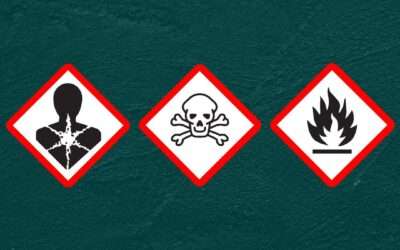
Exposure register: Handling chemical exposure

Companies that handle hazardous chemicals or other high-risk processes may be legally required to maintain an exposure register. The register must document which employees have been exposed to dangerous substances and may be of crucial importance if illness develops many years later.
Here, we examine the purpose of an exposure register, the relevant legal obligations, and how companies can ensure compliant registration and documentation practices.
What is an exposure register?
An exposure register should document employees’ potential and actual exposure, including accidents, spills and other incidents that may have led to contact with hazardous substances. This may be in connection with hazardous substances or processes related to:
- Chemicals (carcinogenic, mutagenic and toxic to reproduction)
- Asbestos
- Mining work
- Biological material
- Radiation
Keep in mind that only certain chemicals are relevant for inclusion in the exposure register.
The exposure register is an important tool for identifying and monitoring exposure to hazardous factors. Because illnesses resulting from such exposure often develop over a long period, sometimes many years after the exposure occurred, it is essential to record incidents continuously and as early as possible.
An exposure register can help to:
- Monitor employees’ health over time
- Provide a basis for health surveillance and support risk assessments
- Ensure documentation if illness develops several years after exposure
Who may be exposed?

Several occupational groups that may be exposed to hazardous substances and processes.
Typical examples are:
- Employees in industry (chemical industry, metal production, welding and woodworking)
- Employees in construction (demolition, remediation, work with asbestos and concrete dust)
- Healthcare and laboratory workers (radiation, chemicals and infectious agents)
- Employees in renovation and waste management (biological material and hazardous waste)
- Employees in mines and tunnels (dust, gases and explosives residues)
- Employees within energy and research (radioactive material and ionising radiation)
What must an exposure register contain?
The content of an exposure register may vary. The information that must be recorded depends on the type of exposure involved – for example chemicals (CMR substances), asbestos, biological agents, mining work, or ionising radiation.
The purpose of the register is to ensure traceable and verifiable documentation over time. The regulations therefore set clear requirements regarding the information that must be included. It is also specified that the register must not contain health data beyond what is authorised by the legislation.
Although the details vary depending on the type of exposure, an exposure register will typically include:
- The employee’s name and national identification number
- The work carried out
- The substance, material, or process to which the employee has been exposed
- The period and duration of the exposure
- Any measurement results or assessments of exposure levels
- The date of registration
An exposure register must only contain the information required by the regulations. It must not function as a medical record.
Documentation and storage requirements
The register must be kept for a very long time, often between 40 and 60 years, depending on the type of exposure. The information must be available for as long as the employee is alive, and can be decisive in documenting occupational diseases and any compensation cases.
Individual employees have the right to access their own registrations. In addition, the register must be available to relevant personnel, for example the occupational health services, safety representatives, the working environment committee and any other persons working with HSE in the company.
Who is responsible for the register?

Both employer and employee have certain responsibilities, but it is the employer who has the main responsibility for creating and maintaining the exposure register.
Employee’s responsibility
- Follow the company’s routines and guidelines in connection with registration
- Report accidents, exposures or other situations that may have led to contact with hazardous substances
- Participate in necessary training and help ensure that the information recorded is correct
The employer’s responsibility
- Establish routines and guidelines for exposure registration
- Provide training on how employees should report
- Thoroughly document and retain records for a sufficient period of time
- Ensure that the register is used
- Ensure that employees have access to their own registrations
Common challenges
Inadequate reporting and follow-up
Many companies find that employees do not report exposures, either because the incident is perceived as minor, the routines are unclear, or because it is simply forgotten. This is often linked to a lack of training in chemical safety and understanding of the risk. In addition, many companies are unsure when they are actually required by law to keep an exposure register.
Difficulty storing registrations over a longer period of time
As some types of exposure require the register to be kept for up to 60 years, it requires good routines for both storage and for safeguarding privacy (GDPR). As long as the employee is alive, it should be possible to document any exposure, especially if there is a risk of cancer. As there are no specific requirements for how records are kept, many companies lack good enough routines to handle this.
A well-maintained exposure register is an important tool for both the employee and the employer. It contributes to prevention, follow-up and documentation, especially because health damage often only becomes apparent many years after exposure. Digital HSE and chemical systems can help companies identify chemicals that are subject to registration, carry out the actual registration and ensure safe storage of the information.