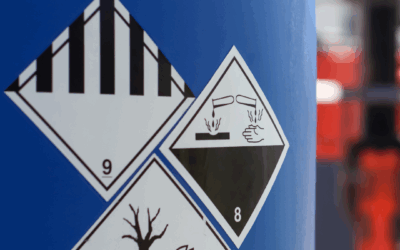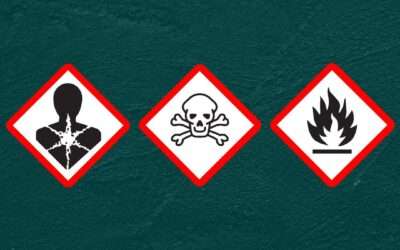
Chemicals are a natural part of everyday operations in many organisations, but improper handling can have serious consequences for health, safety and the environment (HSE). Chemical risk assessment is therefore a key HSE measure for identifying hazards and implementing the necessary controls. In this article, we explain what risk assessment is, why it is important, and how chemical risk assessments can be carried out in practice.
What is chemical risk assessment?
Chemical risk assessment involves a systematic review of the hazards associated with chemical substances and mixtures, combined with an assessment of their use and how employees may actually be exposed during their day-to-day work.
The aim of the risk assessment is to determine whether the use of chemicals or a work activity involves an unacceptable risk of exposure, and what measures may be required to reduce the risk to an acceptable level.
Why is risk assessment important?
Chemicals can have serious consequences if they are not handled correctly. A systematic risk assessment gives the organisation an overview of the hazards associated with the use of chemicals and the measures needed to reduce risk and prevent injuries and incidents.
Health hazards
Many chemicals can cause harm to health if employees are exposed to them over time or through accidental contact. The health effects may be both acute and long-term, and can range from skin irritation, burns and eye injuries to allergies, respiratory problems, organ damage or cancer. The level of risk depends on both the properties of the chemical and the degree of exposure. A chemical risk assessment helps to identify relevant health hazards, assess how exposure may occur in day-to-day work, and ensure that appropriate measures are put in place to protect employees.
Fire and explosion hazards
Some chemicals are flammable, explosive or chemically reactive, and may pose a serious safety risk if they are stored, handled or used incorrectly. Vapours from flammable liquids can be ignited by sparks, hot surfaces or static electricity, leading to fire or explosion. A chemical risk assessment helps to identify such hazards and assess the risks associated with use, storage and handling, so that appropriate preventive measures can be put in place.
Environmental hazards
Chemical substances can harm the external environment if they are released into air, soil or water. Releases may occur as a result of spills, leaks, improper waste handling, or incidents during production and maintenance processes. A risk assessment evaluates the risk of environmental impact and provides the basis for measures to reduce the risk of pollution and environmental damage.
Regulations such as REACH and CLP set requirements for the handling of chemicals, labelling and documentation. Organisations are therefore legally required to carry out and document chemical risk assessments.
What are typical examples of situations where a risk assessment is required?
Chemical risk assessments must be carried out and updated in several situations, including:
- When introducing new chemicals
- When changes are made to work methods or processes
- When new hazard information about a chemical becomes available
- When new work tasks or equipment are introduced
- Following incidents or near misses
- As part of regular reviews of HSE work
If you are unsure whether a risk assessment is necessary, it is generally better to carry out one too many than one too few.

How to carry out a chemical risk assessment
There are several methods for carrying out a chemical risk assessment, but regardless of the method, the process should be systematic and documented. Below is a general approach that can be used as a starting point.
1. Ensure an up-to-date chemical inventory
The risk assessment process begins with establishing an overview of the chemicals used in the organisation. The chemical inventory must contain valid and up-to-date safety data sheets for all chemical substances and mixtures. This information must be accessible to employees, and chemicals that are no longer in use should be removed. An accurate chemical inventory forms the basis for further risk assessment.
2. Define the work involving the chemical
To ensure effective implementation and a realistic assessment of the risks associated with the use of chemicals, it is important to first clarify how the risk assessments should be structured and defined.
A practical approach is to carry out risk assessments for groups of chemicals, for example by:
- Assessing chemicals used in the same work activity
- Grouping chemicals within the same category or type of use
By identifying which chemicals can be assessed together, significant efficiency gains can be achieved. This reduces the need for individual assessments of each chemical, while providing a more practical and operational picture of risk.
3. Assess the hazardous properties of the chemical
The next step is to identify the hazards associated with the chemicals. This is done by reviewing the safety data sheets and assessing their classification. This includes identifying health hazards, environmental hazards, and physicochemical properties such as fire or explosion risks. The assessment provides an indication of how severe the consequences may be if exposure occurs.
4. Assess exposure and existing control measures
Risk largely depends on how chemicals are used in practice. It is therefore necessary to assess how employees may be exposed, including the work activities carried out, the quantities handled, how often and for how long the work takes place, and the relevant exposure routes, such as inhalation, skin contact or splashes. Existing control measures, such as ventilation and the use of personal protective equipment, must be included in the assessment. The purpose is to evaluate the risk-reducing effect of these measures and to document which controls must be used by end users when handling the chemicals.
5. Determine the level of risk
Once both hazard and exposure have been assessed, the level of risk can be determined. This involves evaluating the likelihood of an unwanted event occurring and the potential consequences if it does. The result provides the basis for deciding whether the risk is acceptable or if further measures are required.
6. Implement risk-reducing measures
If the risk assessment identifies the need for measures, these must be planned and implemented. Measures may include substitution of hazardous chemicals, technical solutions such as ventilation, changes to work procedures, employee training, or the use of personal protective equipment. The measures should be integrated into the organisation’s procedures, instructions and training programmes to ensure a lasting effect.
7. Document and review
All parts of the risk assessment must be documented so that the assessments can be reviewed and verified. The risk assessment must be kept up to date and revised when there are changes to chemicals, work processes, or following incidents. Regular review helps ensure that chemical risk assessment remains an active and integrated part of HSE work.
The employer has the primary responsibility for ensuring that risk assessments are carried out and followed up. Managers, safety representatives and employees should be involved, so that the assessment is based on practical knowledge of the work tasks.
Risk assessment in Workplace Safety
In Workplace Safety, chemical risk assessments are carried out directly within the system, linked to each individual chemical in the chemical inventory. The user is guided step by step through the assessment, from identifying hazardous properties and exposure conditions to evaluating work methods, storage and risk level. Chemicals can be assessed together in a simple and efficient way within the system, ensuring a comprehensive understanding of the risks associated with their use.

Workplace Safety facilitates structured documentation, risk assessment and follow-up of risk-reducing measures. Once the risk assessment is completed, it is stored together with the chemical and can easily be revised when there are changes in use, work processes or regulations.
Chemical risk assessment is a fundamental part of an organisation’s HSE work and an important tool for preventing injuries, incidents and adverse environmental impact. Tools such as Workplace Safety make it easier to carry out, document and follow up chemical risk assessments in practice, helping organisations gain better oversight, ensure regulatory compliance, and maintain a safe working environment over time.