Hazard symbols and labeling for chemicals
Chemicals are a natural part of everyday life in many businesses – from industrial production and laboratories to construction sites and agriculture. With chemicals also comes a responsibility: to protect employees, customers and the environment. That’s why you see the little red hazard symbols on bottles, containers and safety data sheets.
Here we go through what the hazard symbols mean, how they should be handled in practice, and what laws and regulations apply.
What is a hazard symbol?
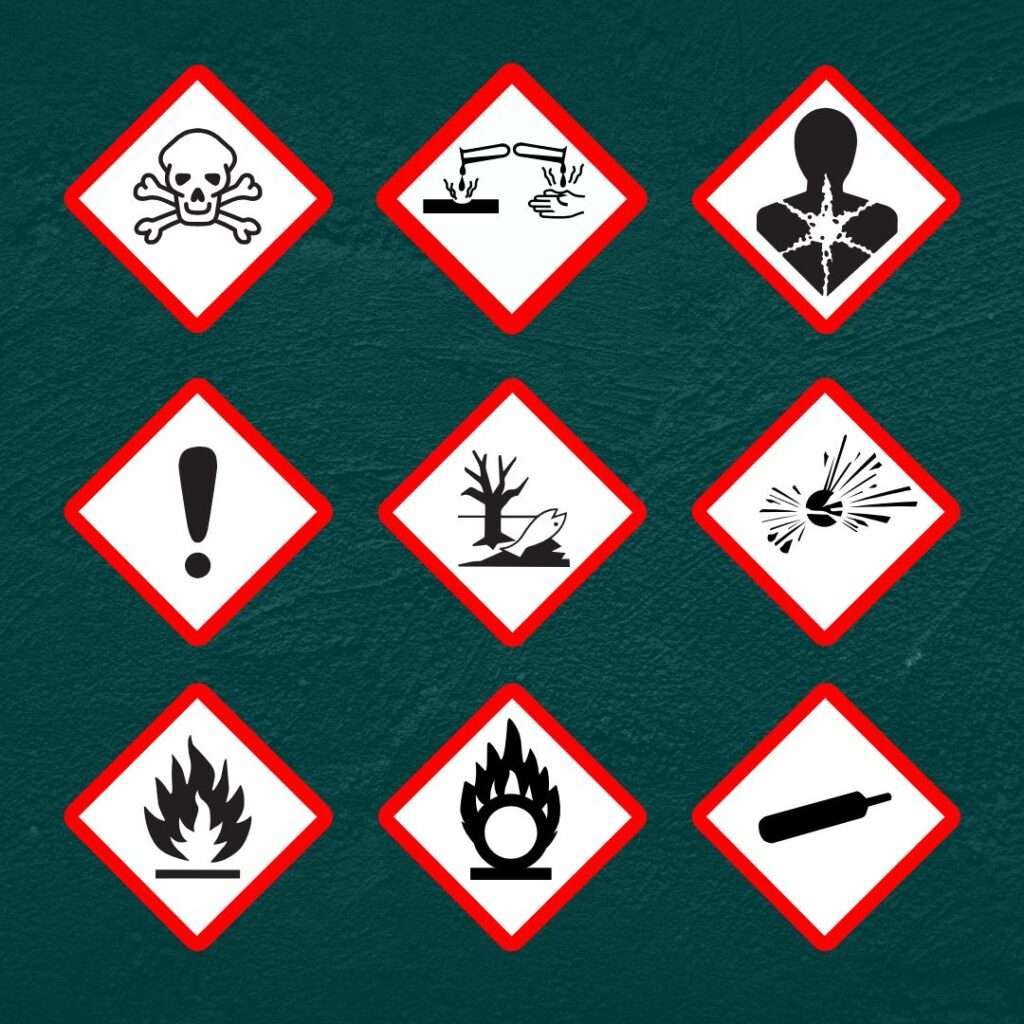
A hazard symbol (also known as a hazard pictogram and hazard label) is a pictorial icon that highlights the risk of chemicals that may expose the user to health, environmental, fire or explosion hazards. The hazard symbols are designed to be understandable for everyone. In other words, you don’t need to know chemistry to understand that a picture of a flame means “flammable”. This makes it easy to identify potential hazards, regardless of situation and language.
Where are the hazard symbols located?
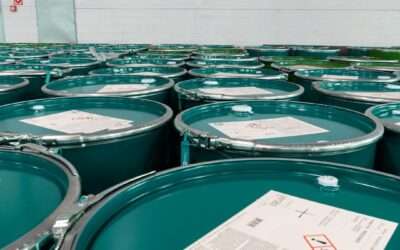
The hazard symbols must be clearly marked on the product being used, and can be found on the packaging or in the safety data sheet (SDS). Sometimes the workplace may also have its own lists of hazard symbols on cabinets, containers or other storage areas, for example when storing chemicals in large quantities.
What do the hazard symbols mean?
Previously, orange hazard symbols were used, but from 2015 these were replaced by red and white diamonds. Each symbol represents a specific type of chemical hazard:
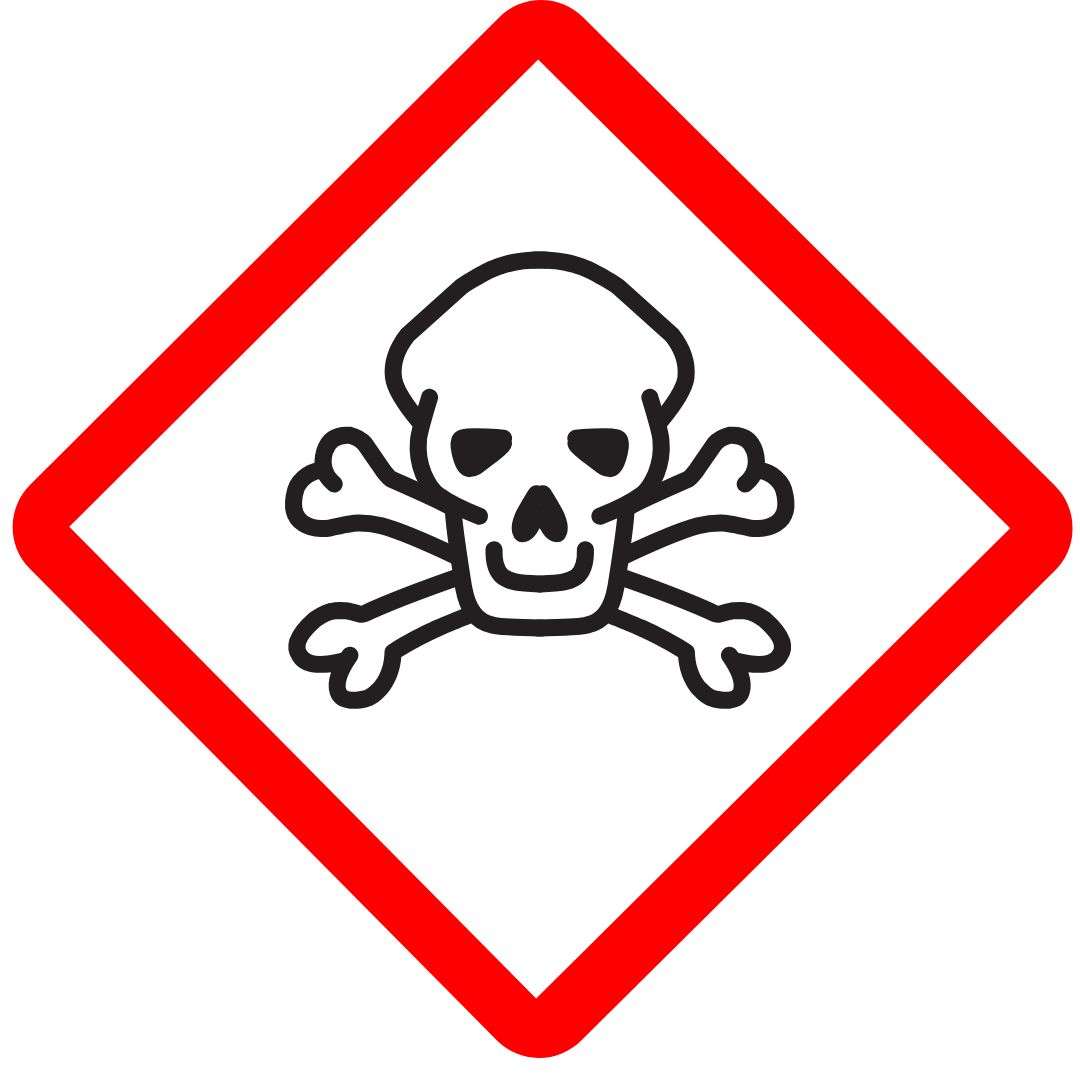
Acute toxicity<br>
May cause life-threatening injuries if swallowed, in contact with skin or inhaled.
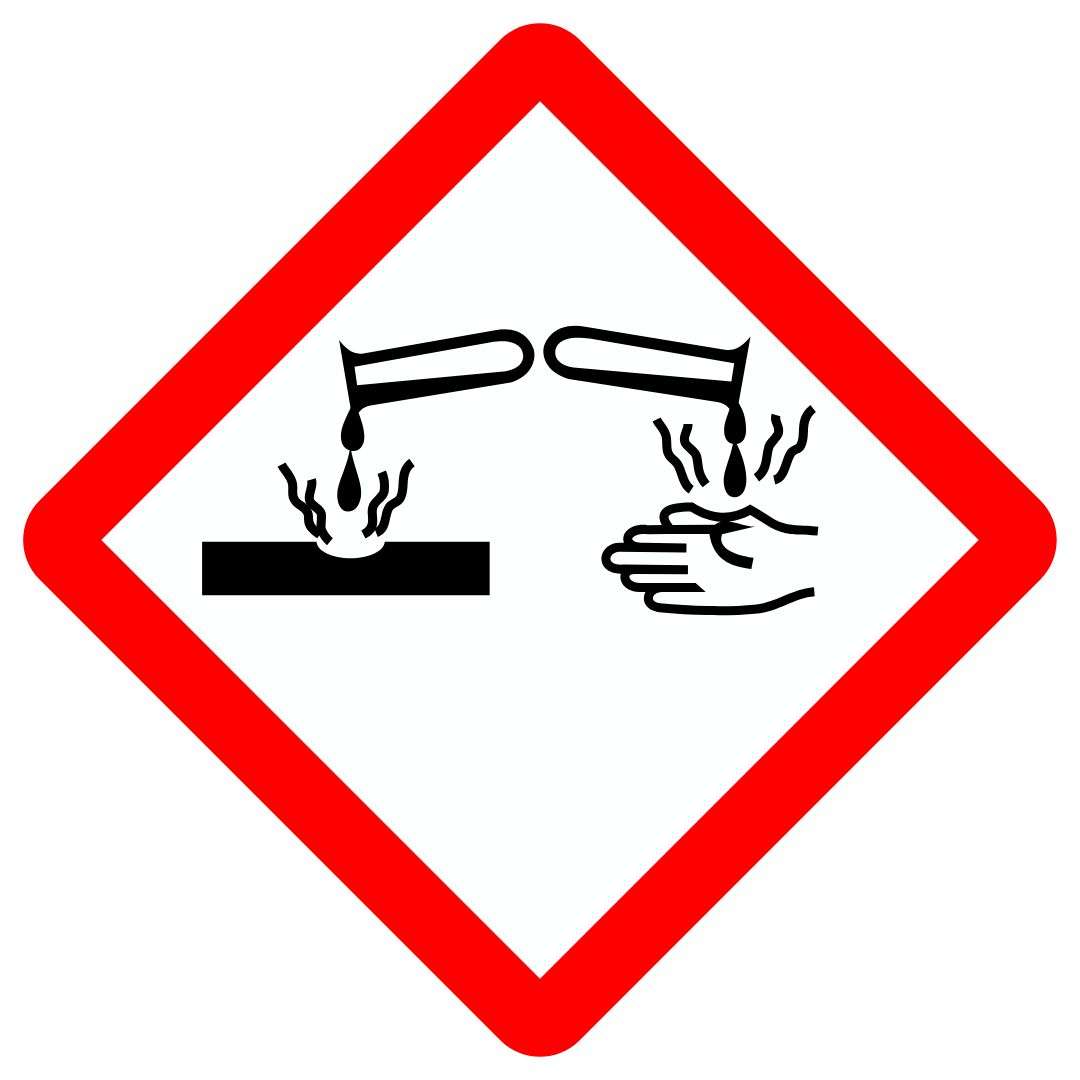
Etsende
Kan forårsake etseskader på hud og øyne eller alvorlige øyeskader. Brukes også for kjemikalier som kan etse på metaller.
Brukes også for kjemikalier som kan etse pa metaller.
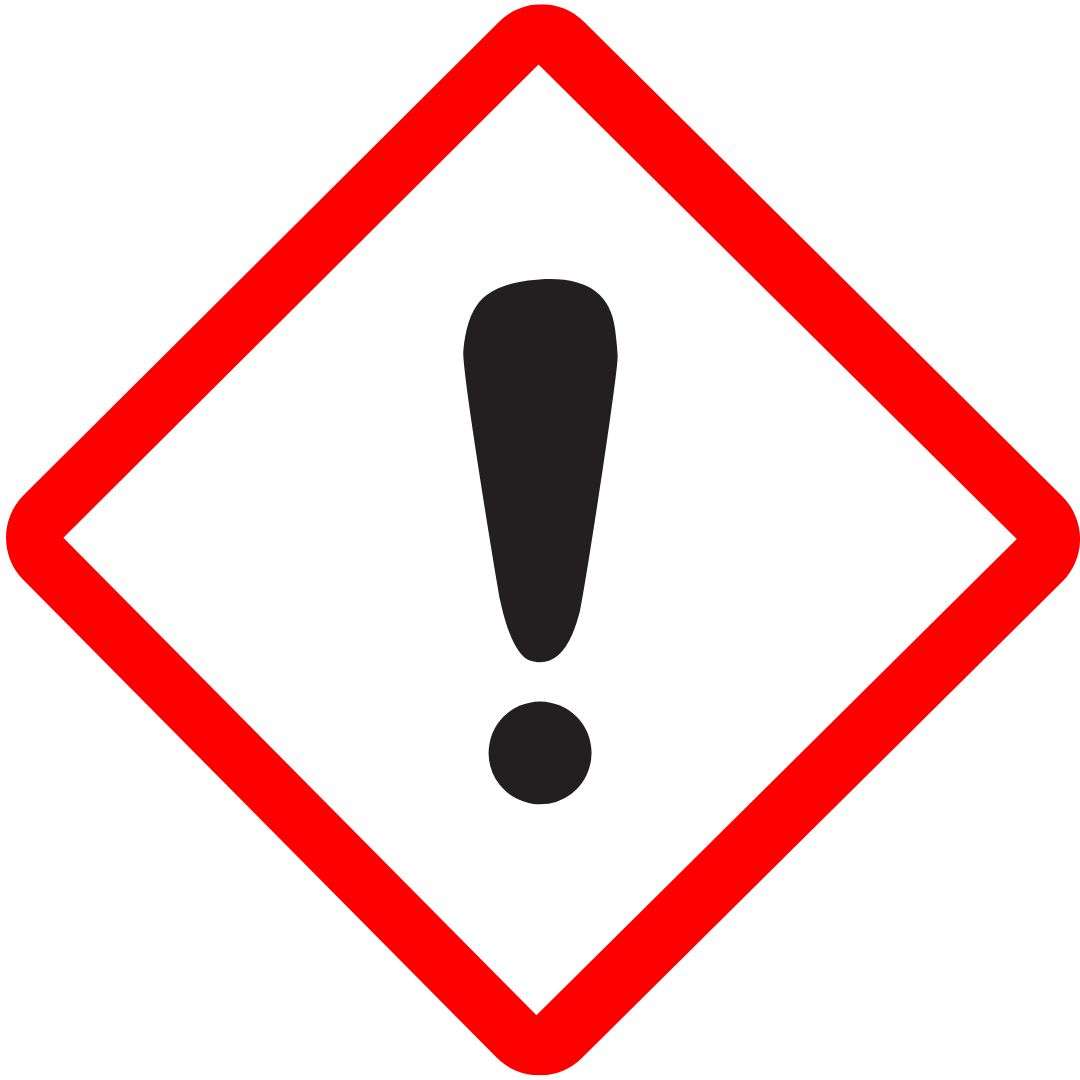
Helsefare<br>
Kan gi irritasjon på hud, øyne og luftveier, allergiske hudreaksjoner, døsighet og svimmelhet.
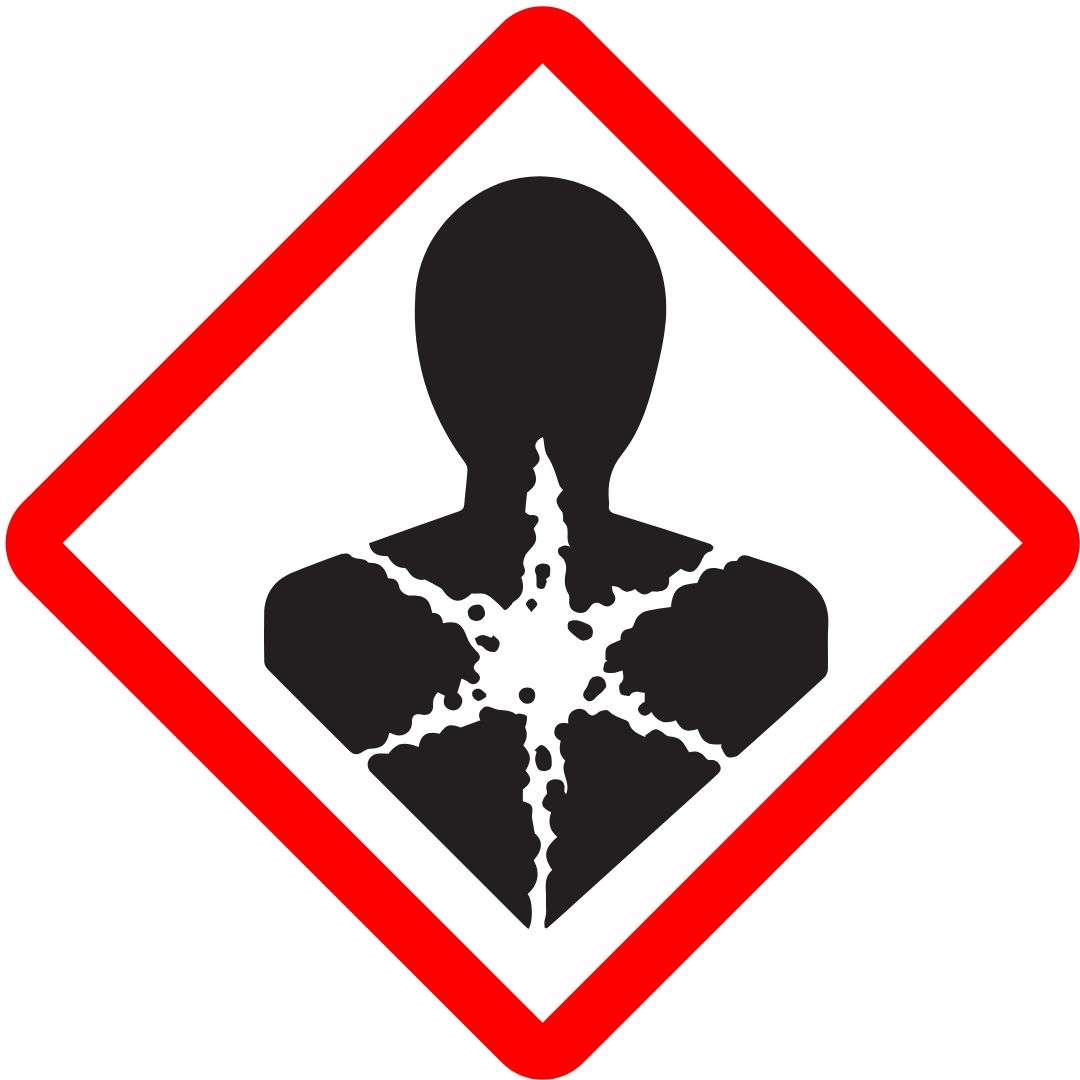
Chronic health hazard<br>
May cause cancer, genetic damage, reduced fertility, birth defects, inhalation allergy, chemical pneumonia or other serious health effects.
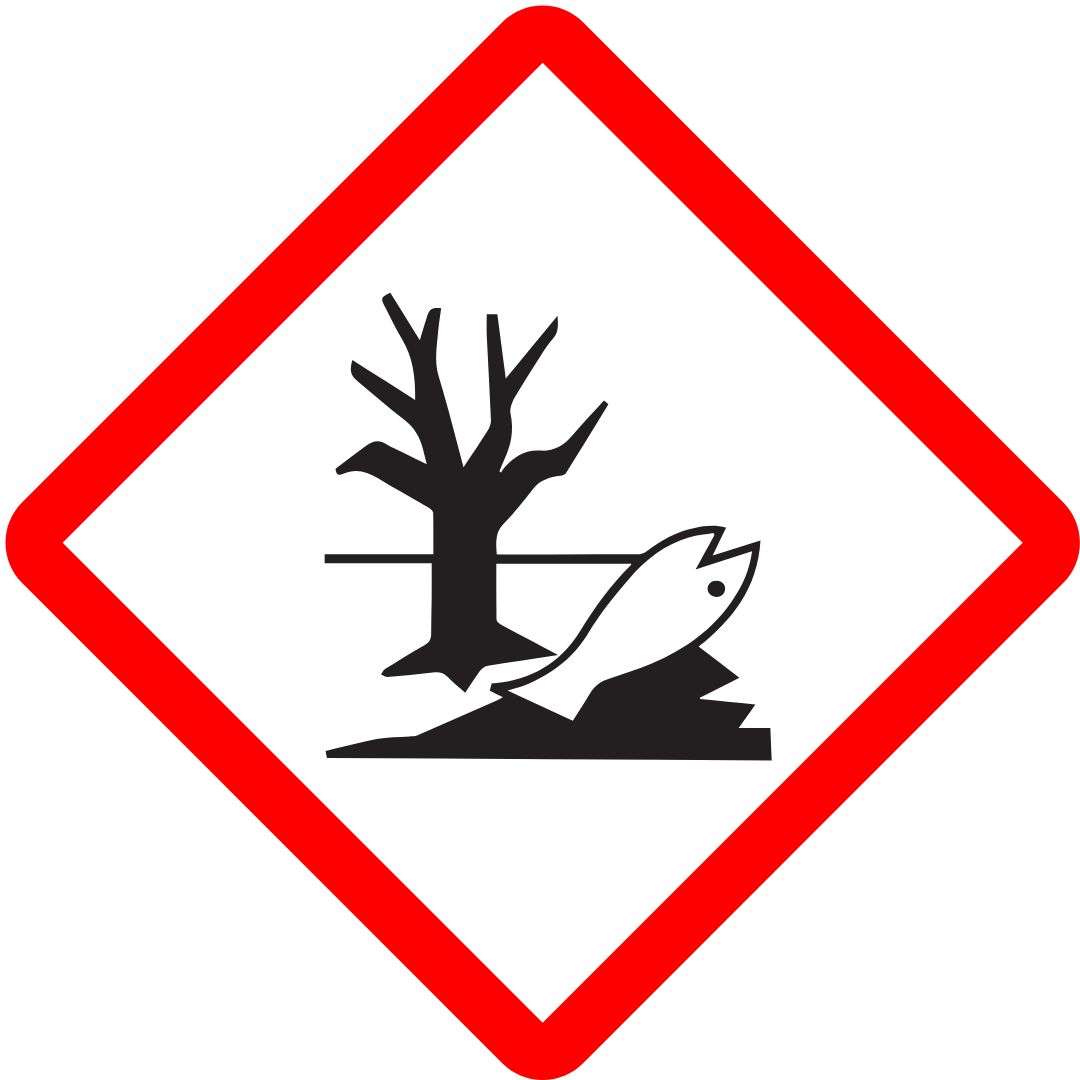
Environmental hazard<br>
Can be acute or long-term toxic, and/or cause long-term damage because the substance is persistent and bioaccumulative. Must be handled so that the product, either in use or as waste, does not harm nature.
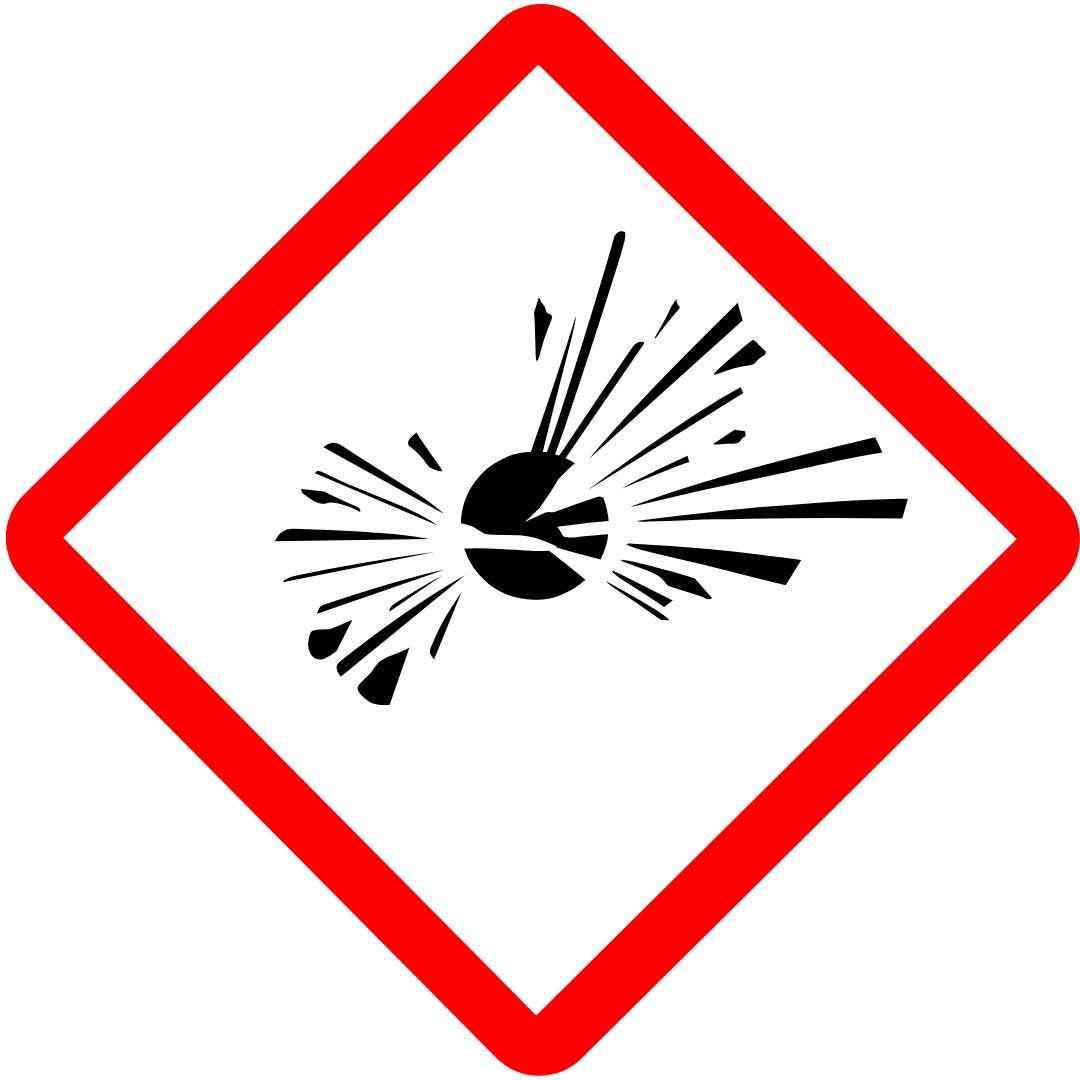
Explosive
May explode on impact, friction, sparks or heat.
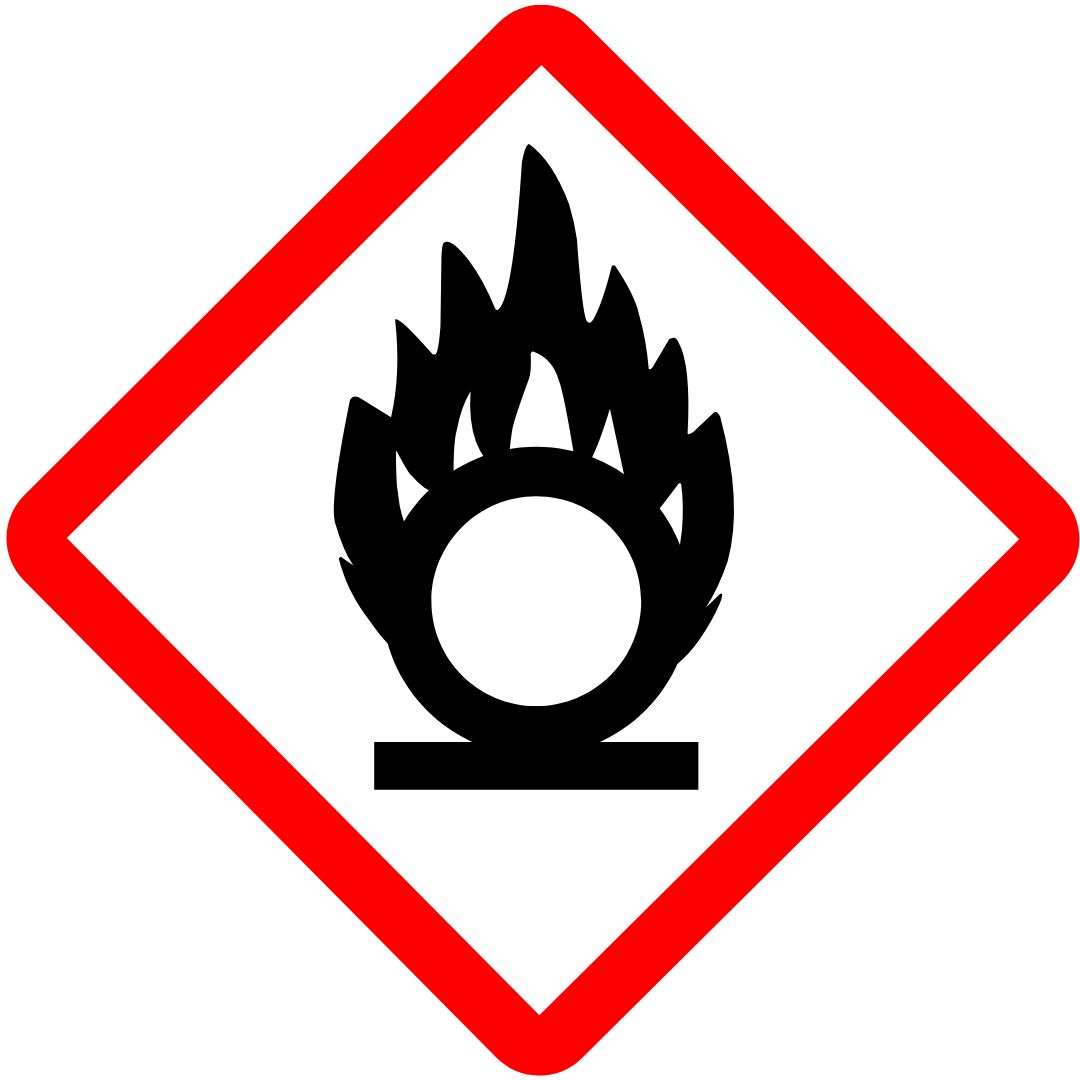
Oxidising
May cause fire or contribute to the combustion of other materials.
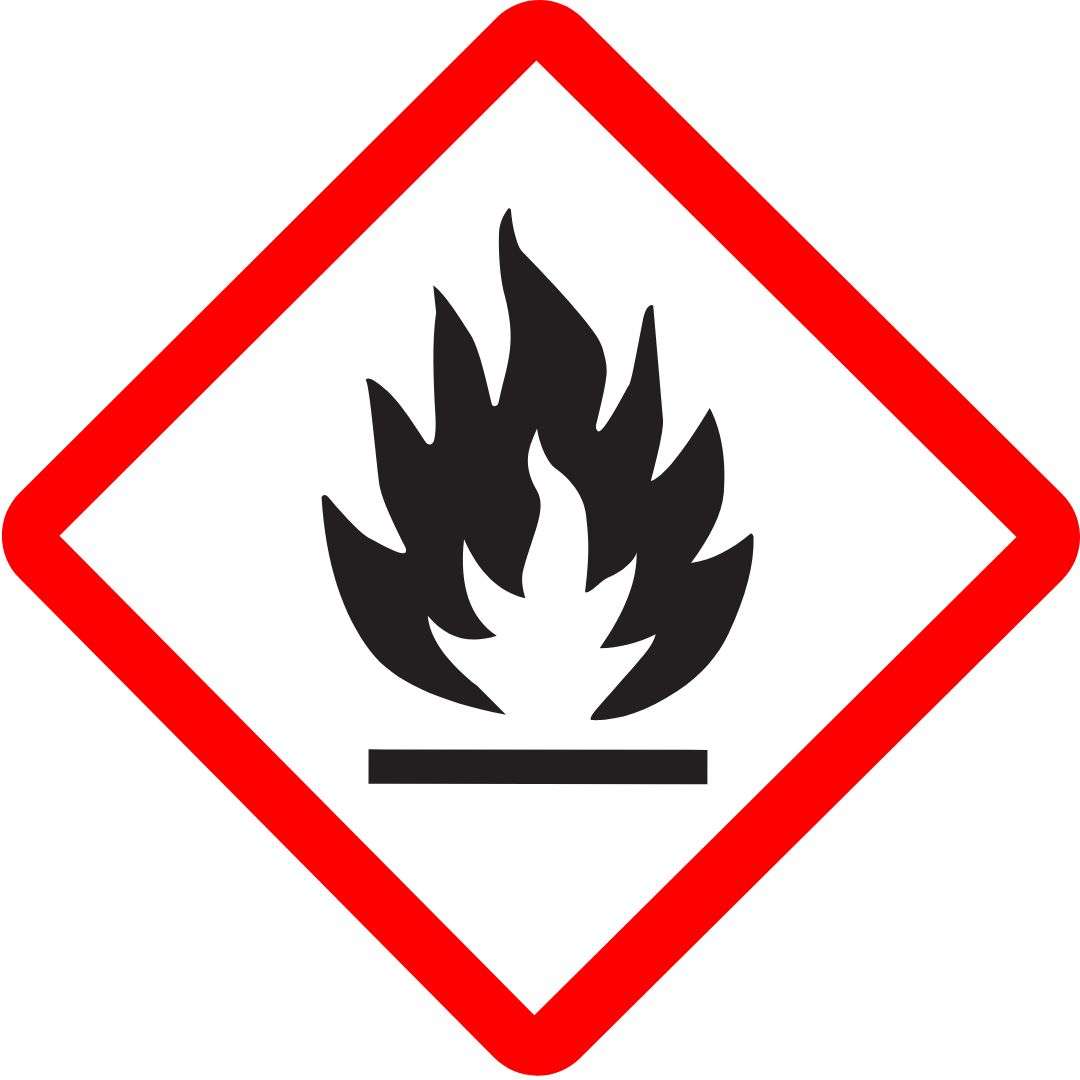
Flammable<br>
Can ignite easily and burn violently. Some chemicals produce flammable gas in contact with water or self-ignite in air.
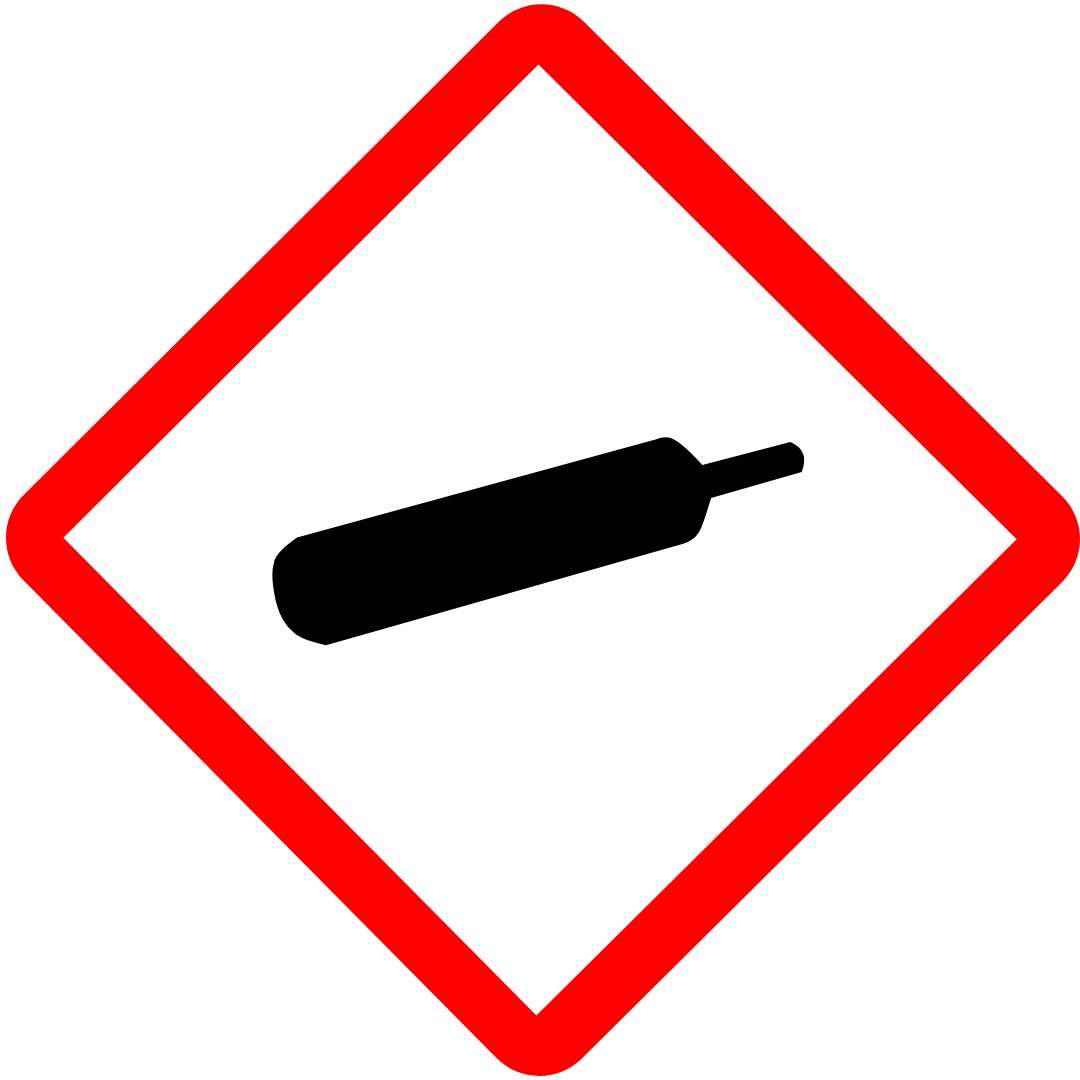
Gas under pressure<br>
Container with pressurised gas or extremely low temperature. May explode in case of external fire.
How to handle hazard symbols?
Hazardous chemicals in Norway must be labeled with a hazard label in Norwegian that provides information about hazards and necessary precautions. Among other things, the label must contain a hazard symbol, warning words and hazard and safety phrases (H and P phrases).
If you notice a hazard symbol on a product, you must take extra precautions. This may involve:
- Always read the hazard label before use
- Check SDS for more information
- Follow the instructions carefully
- Use the right protective equipment
- Ensure sufficient ventilation
- Avoid mixing incompatible chemicals
- Wash hands, clothes and equipment thoroughly after use
- If swallowed or poisoned, contact Poison Control or emergency services
Laws and regulations
International regulations
Norway follows the European regulations, the CLP regulation (Classification, Labelling, and Packaging), which is based on the global system GHS (Globally Harmonized System and Classification and Labelling of Chemicals), but is adapted to the EU/EEA.
In addition, the REACH regulation applies, which regulates how chemicals in Europe must be registered and assessed before they can be used or sold.
Norwegian regulations
In addition to the international regulations, the following also apply:
- The Working Environment Act
- Regulations on the performance of work
- Fire and Explosion Act
- The Product Control Act
Responsible authorities
- The Norwegian Environment Agency: Primarily responsible for the CLP and REACH regulations in Norway. Provides guidance on classification and labeling, and supervises manufacturers.
- Labor Inspection Authority: Responsible for chemicals in the workplace, including HSE, protective equipment and training.
- Directorate for Civil Protection (DSB): Responsible for handling flammable, explosive and pressurised substances.
- Other supervisory authorities include the Norwegian Food Safety Authority and the Norwegian Ocean Industry Authority.
Hazard symbols are not just little red icons on a label. They are the key to understanding and following chemical regulations. When employees know the symbols, read the labels and follow the instructions, they contribute to a safer working day in line with national and international requirements.
In addition, the hazard symbols provide a common recipe for how chemicals should be described and labeled, no matter where in the world they are used. This makes communication easier, provides a better overview in the workplace and ensures that everyone speaks the same “language” about chemicals.